
A Warning at the Painted Line
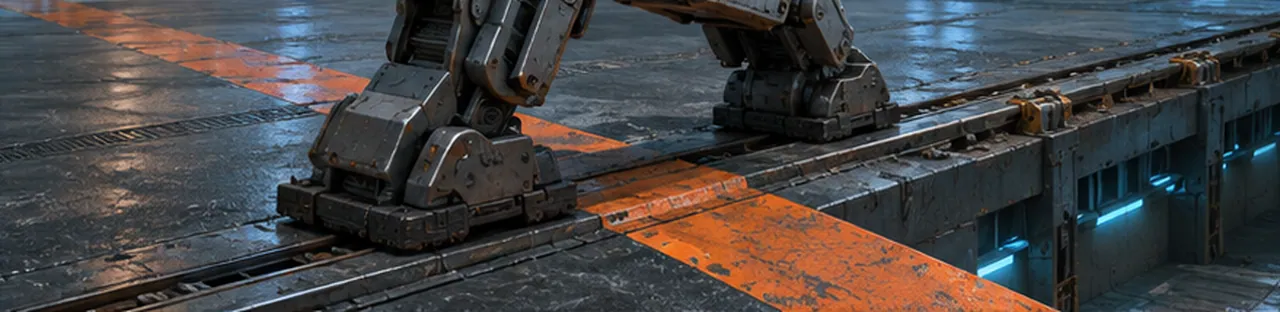
Watch the foot and the stripe together
An orange floor stripe keeps a titanium unit inside one portion of the practice hall. The current prototype does not need a real collision in the scene. It needs the pilot to recognize when one part of the walker is moving across the edge. A first draft turned the entire border bright whenever the chassis came close. That change showed a warning without revealing which side of the foot was actually taking a new position.
Make a local mark visible beneath the load
The next version gives the stripe a pale worn area where a low metal edge crosses it. As the machine moves, the foot covers that pale area before the rear part of the walker reaches it. A small shadow allows the border to stay visible behind the moving plate. Look for the foot after it touches the line once. The second movement shows whether it crossed the lane or followed the visible stripe for another step.
Separate the mark from decorative paint
The same hall has orange trim around a doorway and on several other objects. Our earlier camera angled toward the door, where the floor marker looked like an extension of the wall. The revised view drops just enough to see the chipped part of the line in front of the door. The stripe then passes near the foot. From a farther view the chip indicates the position of that step after the chassis blocks the most direct angle.
Prevent a pause from becoming an alarm
Slowest in the Line lets the leading group wait while the last walker slowly catches up. The tail may stand very close to the edge without changing lanes. Keep the painted strip visible during the pause and wait until a new step changes the earlier footprint. The Gap at the End of the Line looks at the related spacing problem. Its larger distance marker should continue to work even if the new lane alert stays quiet.
Recheck from a corner in the practice run
At a wide bend the farther machine can appear overlap the same line in the camera though it occupies a separate lane. Turn to a close view of the inside marker and compare it with the floor behind the far leg. The stable part of an adjacent stripe provides enough of a second angle to identify what has actually crossed. We use a similar move in The Inside of a Wide Turn when looking at the outer route.
Keep the warning available through a second step
During testing a very brief alert made the change look complete after the first movement. The current design lets the local mark stay visible until you can see the second position. That later view still holds the old stripe beside it. A person can see how the foot leaves the lane rather than being told to react because a border changed color. This gives the pilot time to decide when to slow the group.
Use the marked floor in a new light
A torch above the hall turns the same strip brighter before the line is crossed. The worn area stays almost the same color. It can reveal the edge even when the visual warning itself blends into the newer lighting. Check the equivalent view with the sound muted, then compare where the first new motion begins. The original case should give a recognizable visual reference even if the alert tone is absent.
Keep both pictures with the dispatch
Formation Dispatches puts the warning on the time band after the first tail interval study. The next illustration can show several machines crossing a much longer line in sequence. A physical marker on the floor should still indicate which part of the group is near the relevant border. We want the warning to help a player follow the movement they are already trying to see.