
The Inside of a Wide Turn
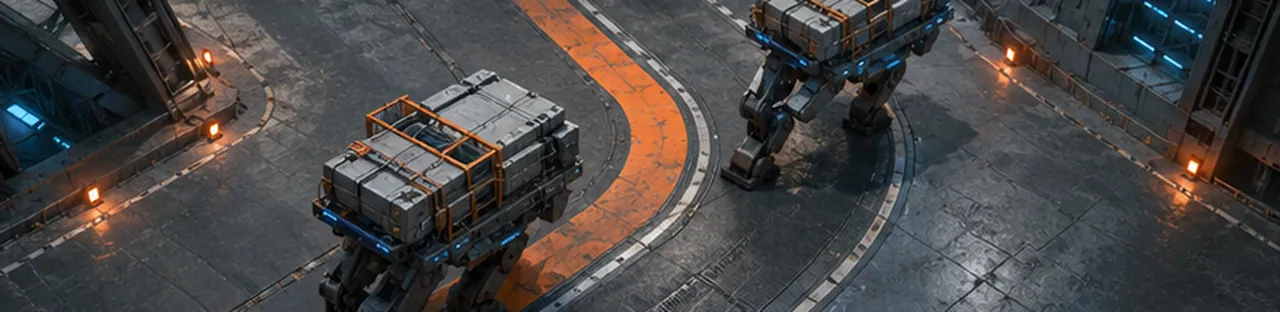
Watch the inside path reach the mark first
On the flats the titanium group rounds a dark ridge before approaching an open stretch. The inside route bends near a broad amber stripe. The outside track needs a longer curve, and at one point the machine there is almost hidden by a nearer chassis. The first version of the scene showed every walker from the high camera. That made the turn clear but did not help explain what happened to the outer unit when someone looked from a lower view.
Keep two floor references visible
The revised practice area has an old broad marker at the inner edge and a thinner one beyond the middle of the turn. A person looking at the far side can see the thin one close to the outside leg. The wider stripe appears again at the earlier point when you turn back. Keeping a line between their positions gives the pilot time to estimate how the outside part of the group is progressing.
Match a shared position rather than a shared moment
The two walkways meet near a division in the ground. Let the first walker get far enough to see both opening edges before asking the rest of the close line to move on. The inner unit may choose a place to rest beyond the stripe. In The Break Across the Flats that option appears before the longer route reaches its first clear mark. Waiting keeps the first unit as a useful visual reference without making the whole group move at the same point.
Draw one older footprint from the inside
A set of pale tracks through the dusty ground makes the first change of direction clear. In the closer view one section approaches the edge of the route and disappears around the corner. The farther track still shows where the two routes are likely to meet. The move from a fixed strip to a track helps preserve context while walking into the wider space. The machine itself grows smaller, which makes that second reference useful.
Keep lane width visible through overlap
A Warning at the Painted Line describes a short local movement at a fixed boundary. At the turn the movement may look like a bigger step because part of the outside walker remains hidden. A narrow line on the ground returns before the whole unit is visible. The pilot can compare that place with the other marks they remember. We can leave some units partially out of view if the pace of their lane still has a reference.
Give the outside group a choice of stops
The final outside curve reaches two useful positions. One has a long view down the approach. The other shows more of the maintenance doors and gives less room to see the tail. A player can stop at the earlier one while working out what remains behind. Handoff at the Two Doors carries that choice to the later position and checks which members still need another signal before moving to the next room.
Replay with a slower unit on the inside
Moving the largest unit to the nearer curve can make the early wait longer than expected. The outer route covers more ground but may still catch up in the brighter area. Watch what happens to the two floor references as the longer route reaches its end. The original curve should still be understandable although the composition of the group changed. This keeps the prototype from depending on one fixed arrangement of walkers.
Keep the analysis near the wide cover
Formation Cases opens the wide approach beside this study so a reader can locate both marks before seeing the turn at close range. The next trial may use a wider ridge and paint only one target line after the bend. It will be important to preserve a second kind of reference where the tracks meet. The turn should still end in a recognizable position for both groups.