
Formation Room
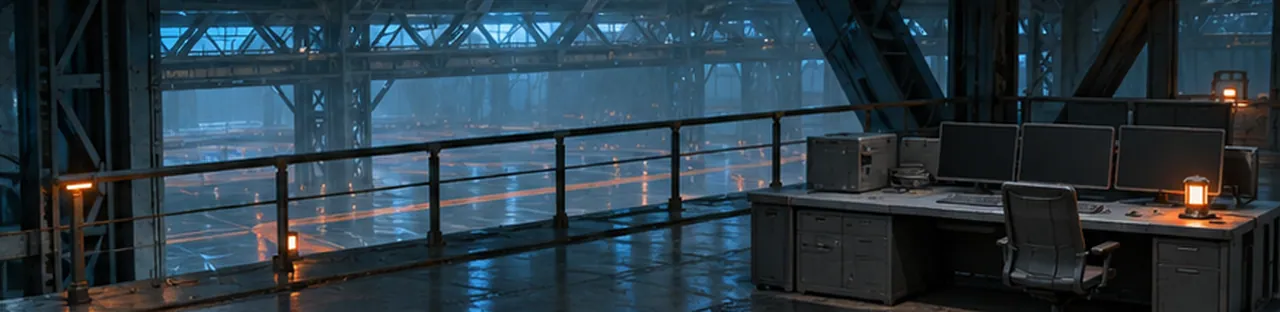
Start a coordination test in one visible area
Armelm Studios develops original games about groups of heavy mechanical walkers moving together. The Formation Room begins with a few machines and a low number of lane choices. Draw the first and last members in the same wide picture. The distance between them can then be studied at a closer angle. A large unit should retain some distinct edges when it overlaps another member of the line.
Give each role a different way to see the group
A systems designer selects intervals and positions where movement can pause. An environment artist places floor marks, doorways and large shapes behind the machines. An animation role separates individual steps from the broader motion of the group. Interaction review checks whether a player can move the view between members without losing the reference that showed a developing gap. The same role can watch how a group responds after waiting.
Use the two prototypes for separate questions
Slowest in the Line studies an open distance near the tail and the choice of when the leading units should hold. The Break Across the Flats studies an inner lane that needs less time than the outside one. Both benefit from positions visible in a wide and a close view. The references have to give useful information for the movement each project uses.
Keep a watch long enough to compare
An initial attempt can show the group positioned correctly while the player is unsure what just changed. We repeat the view in a way that holds one stable marker near the foot of a unit. A marked stripe can then show when a machine actually crossed the lane. A farther lamp can help tell whether the outside of the formation has moved while the near unit appears to hold the same position.
Record a change with its earlier route
Formation Dispatches keeps small decisions about the route with the case whose movement changed. Send a Formation Note if a view makes the position of a unit difficult to understand. Give the type of turn or room and the first place where an old reference stopped being visible. A recognizable marker helps the room re-create the view.