
Slowest in the Line
Return to Formation Cases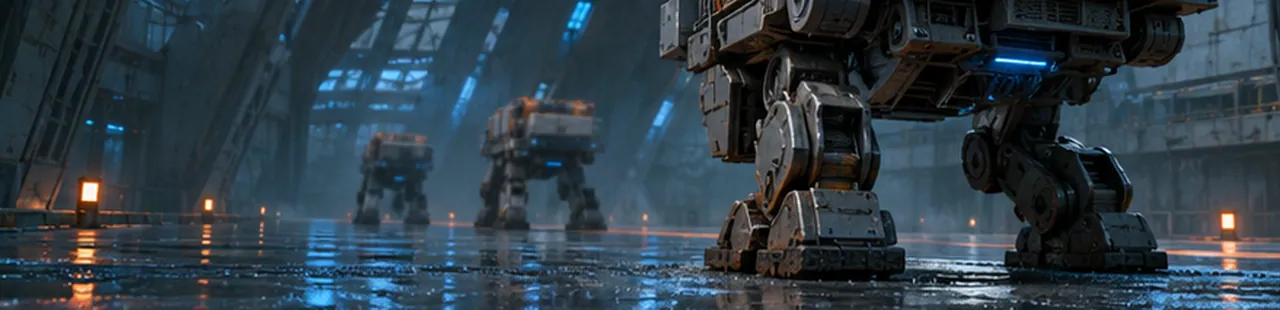
Start with different walking intervals
Three heavy cargo walkers enter a tall hall in a row. Their outlines are easy to tell apart from the wide view. The last one takes a little longer on each step. At the third floor stripe the distance has grown noticeably, although none of the machines is leaving a planned lane. The prototype asks the pilot to coordinate their movement with enough time for the last one to continue.
Read the part of the gap that changes
From the front the two machines nearest the door may look close together. The trailing unit appears smaller because of the distance. Put a storage beam at the edge of the view and follow the speed at which the last unit moves away from it. The Gap at the End of the Line compares this reference with another stripe on the floor. The length of the opening can be checked without treating the smaller size of the walker as a change of pace.
Wait at a place with both views available
The group can hold near a broad section of the floor. The line behind it is still visible around part of a support. A pilot can watch for a change in the last walker while choosing a route toward the next door. Wait until the nearest machine no longer blocks the view of its rear unit. Then check where the next floor stripe meets both machines before asking them to move in order again.
Catch a lane error at the right scale
A short step across a paint line can happen as the last unit catches up. A Warning at the Painted Line describes a test that keeps its foot visible beside the edge. The pilot can use the warning to change the group’s pace before another walker reaches the same place. A line seen from above shows enough of the lane to check if it was a momentary crossing or a continuing move along the wrong side.
Bring the last walker into the exit picture
When the leading unit reaches the exit, the slower one may remain visible in the older part of the hall. The prototype holds the previous view until the rest of the line reaches a place from which all three can be located. A wide door begins to frame the group when it comes together again. A smaller view of the floor lets the player confirm that they did not leave the last unit out of the next stage.
Use weight and light to show pace
Titanium plates catch short blue lines from the hall. Near the ground orange paint gives the foot of each machine a fixed comparison. A slower walker holds its rear leg in place a little longer. The sound of contact stays close to the machine. An outside view keeps a little shadow beneath all three so the order can still be read when the pilot turns away from the brightest part of the room.
Current prototype
The concept covers one movement along a clear hall with room to pause halfway. Formation Cases compares the group’s size with the edge of the trail in two different views. The next test can make the lead unit slower instead and watch how players adjust the group when the long gap appears nearer the front. The short hall helps show which clues a person can already use before the positions change.