
The Gap at the End of the Line
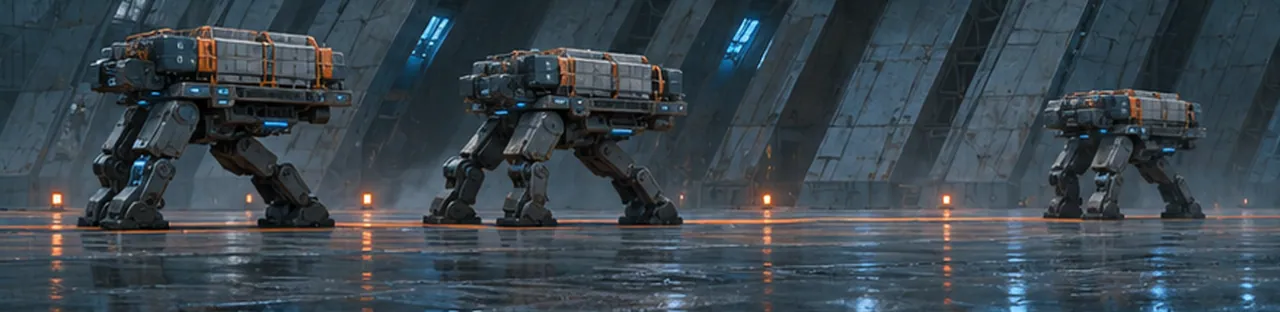
Compare a real space before moving the group
In the hangar test a slow walker follows two other walkers through a stretch of floor marked by painted stripes. The earliest picture used a camera close to the lead unit. The last machine grew smaller and looked as if it was falling back even while moving at the same speed. A player who looked for the last unit after taking another step had trouble telling what had really changed.
Preserve a mark visible near the tail
We moved the camera just far enough to show a floor stripe beside the last machine. The stripe ends below a darker joint in the wall. The walker crosses the nearer end while the other two pass an older stripe farther along. That evidence gives the pilot a reference for where the last machine was a moment ago, rather than requiring an estimate based on how large it looks in the picture.
Keep a consistent variation in pace
The last walker has a short wait when its front leg reaches a heavy patch of the ground. It does not pause on every step. In an early iteration the delays occurred at unrelated positions. We aligned one with the darker floor joint and left the next beyond the stripe. Players can follow the first pause across the known opening while the earlier units continue to move toward the light at the door.
Decide what the leading units should do
In Slowest in the Line the pilot can pause the front group after reaching the next broad space. One part of the line stays close to the tail in the wide view. When the slower unit reaches the second stripe the player can choose to move again. The earlier choice to wait is visible because the first two walkers have not already left the frame. A surviving open area behind them makes the final reunion easier to see.
Check a lane event separately
The spacing can change while the walker stays in its lane. A Warning at the Painted Line describes what happens when a foot begins to pass a separate border. Keep those observations distinct in the new scene. The gap between units can be large without causing a lane problem. A short crossing at the border can happen without stretching the line. The player needs evidence for which change is happening before correcting it.
Use stills to compare timing
The first image shows the last walker before it reaches the opening. A second image preserves the light right above the stripe while the first two approach the next door. In the last image the trailing machine begins to cross the mark. If the stripe leaves the frame, the time difference becomes less obvious. We keep it slightly off center so it can be found in all three pictures while other landmarks enter and leave.
Give the group room to remain readable
A closer camera can place the tail near an orange lamp beside the road. That lamp may be useful on an outside route, although inside it lies behind the machines and moves out of view. The wider image consistently shows the floor shape as the group enters. Formation Cases displays the wide approach before the smaller spacing study so a person can place both of these possibilities.
Examine an earlier pause in the next test
Formation Dispatches records the move to the visible stripe and the change to the last walker’s pace. A later example can put the same shape in a corridor with a wider exit. We can check whether a person can still estimate the tail gap from a shorter view. Keeping the earlier positions visible at the new pace should help us distinguish that awareness from a correct guess about when to move on.