
Handoff at the Two Doors
Look for the last unit before changing scenes
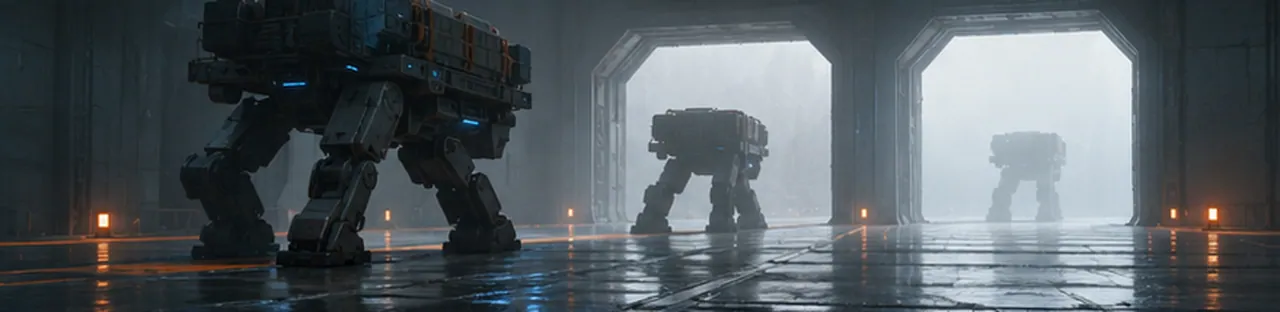
A set of titanium cargo walkers reaches two frosted maintenance doors. The first door opens just as a line of painted floor becomes visible beyond it. The earlier prototype left the route once the lead machine crossed that line. The last one could remain several steps away with most of its outline behind the edge of the door. The person directing the group needed a way to confirm when the last part of the route was finished.
Put the door and its marker in a wider view
The current case retains a patch of light outside both doors. The last walker appears briefly in that patch before entering the hall. The bright reference is stationary. It stays visible when some of the larger units are already inside. A low stripe between the doors also remains recognizable from the view of the floor. Use both to judge whether the group is coming together or only stopping at different places.
Give the previous camera time to finish its work
Changing the camera angle used to be the most visible event after the first machine arrived. We delayed that change until the pilot can recognize the position of the remaining one. Then the next view comes from a place where the door that was open remains visible at one edge. The Break Across the Flats ends its long approach through a bend before showing this larger view. It is easier to recognize the first position if a little of its route is still in the frame.
Distinguish a transfer from a join
Another group can be waiting in the second maintenance hall. The pilot first follows the remaining walker past the earlier mark. The next move puts the new group’s position beside the remaining part of the old line. Give the two sets of machines different silhouettes and enough light behind the nearest one to show which belongs to which room. The next decision begins after the original route can be treated as complete.
Match what is visible at the tail
The Gap at the End of the Line gives a view of the last machine next to a reference where its motion was still developing. At the doors a similar view is possible above the floor. The unit can stand clear of the earlier mark without its entire group still visible. This cue belongs at the end of the route rather than to a continuing check of the front. A picture can make the same distance useful for a different purpose.
Show the last turn for an outer walker
A unit at the edge of the formation can enter the shadow of a door at a slightly later angle. The Inside of a Wide Turn tests a related wait outside a larger curve. In the doorway scene the inner part of the group remains clearer because its bright edge stays in the hall. The last step around the wider opening should still be visible beside a track from the previous picture.
Hold a quiet view after movement
One test keeps the first two units nearly still while the last one takes a final step. There should be enough difference in their positions to show why the group could not continue sooner. After the last machine arrives, a broad view of the door holds them together for a moment. It gives the pilot time to place one group before looking at the next. The scene does not have to change immediately after every successful action.
Record the place that stays in view
Formation Dispatches links this record to the final date on the band. The next version will try a single exit followed by a space where the group splits on the other side. It still needs a clear ending to the first movement. The paint at the edge of the door gives a practical reference to compare with the two frames we have now.